History
A signed contract, not a myth, financed Fairchild's founders
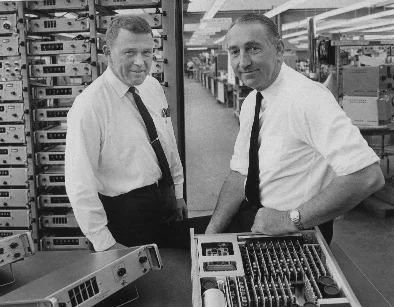
Museum archives date the 1957 resignation and financing, but not a founder equity split.
3 min · 2 source records
THE DOCUMENT TRAIL / 200 EXISTING RECORDS
Company filings, policy documents and historical decisions. These preserved retrospective records sit alongside the new practical guides—not in their completion count.
Prepared September 2026. Original checks and dates remain attached; this expansion does not freshly verify every archived claim. Check current terms before acting.
200 records
History
Museum archives date the 1957 resignation and financing, but not a founder equity split.
History
HP's own archives date a 1957 objectives statement; a proven template for other cultures it is not.
History
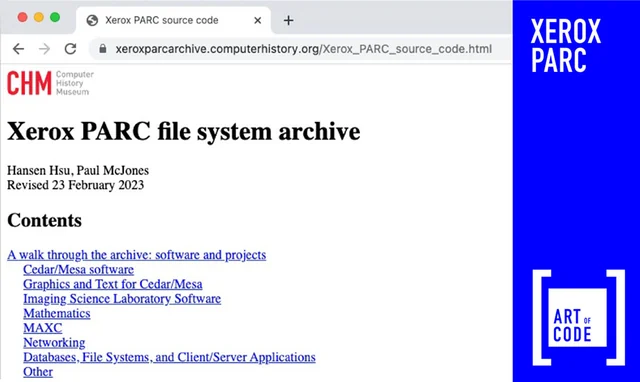
Museum records tie Adobe's 1982 founding to one slow project inside Xerox, not a full account of missed PARC bets.
History
SEC filings date the February 2000 IPO and the November 2000 wind-down decision, not its cause.
History
SEC filings date a $1 billion build-out plan against a $402.6 million IPO, and the 2001 Chapter 11 filing.
History
SEC filings date the 1999 IPO, the widening losses, and the March 2001 Chapter 11 petition.
History
SEC filings date a December 2001 covenant waiver and the January 2002 Chapter 11 petition, not a single cause.
History
The self-published Getting Real states 37signals' process; its outcome claims are self-reported, not audited.
History
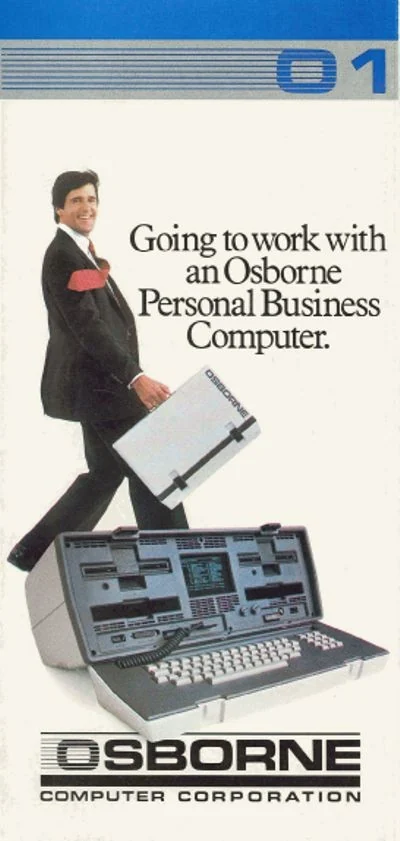
A museum finding aid dates the filing to September 1983; it does not confirm the Osborne-effect story.
History
The January 1975 Popular Electronics issue and a Smithsonian record date the Altair 8800's launch.
Company records
Snowflake's 2020 S-1 discloses a 158 percent net revenue retention rate and says in the same filing that the number should fall over time.
Company records
Palantir's 2020 S-1 caps founder voting power at 49.999999 percent and discloses customer concentration separately from that governance structure.
Company records
Zoom's pre-pandemic S-1 discloses GAAP net income of 7.6 million dollars for fiscal 2019, a figure the filing cannot be read past.
Company records
DoorDash's 2020 S-1 discloses marketplace gross order value alongside a named, pending worker-classification claim it does not resolve.
Company records
Coinbase's 2021 S-1 discloses that transaction revenue was over 96 percent of net revenue in 2020, a figure tied to volatile trading volume.
Company records
Robinhood's 2021 S-1 discloses that four market makers supplied 59 percent of revenue in a quarter, under relationships it says are not binding contracts.
Company records
Affirm's S-1 discloses Peloton at up to 30 percent of quarterly revenue and a credit-loss allowance the filing calls a modeled estimate.
Company records
Warby Parker's 2021 S-1 attributes a 2020 swing to 60 percent e-commerce to store closures, then shows a partial reversal by mid-2021.
Company records
Duolingo's 2021 S-1 reports 5 percent of monthly active users as paid subscribers and calls its own user metrics internally produced and unaudited.
Company records
Instacart's 2023 S-1 shows gross transaction value of 28.8 billion dollars against 2.6 billion dollars of revenue, with advertising as the faster-growing line.
Company records
Peloton's 2021 proxy statement discloses a Class B structure giving its founder 20 votes per share and 39.6% of total voting power.
Company records
Lyft's 2019 S-1 discloses improving Contribution Margin alongside unresolved driver-classification litigation and settlements.
Company records
Blue Apron's 2017 S-1 disclosed a customer count and marketing spend that a 2018 10-K shows falling 28% within the year.
Company records
Casper's 2020 S-1 discloses a marketing-to-revenue ratio that improved, then rose again as its retail rollout accelerated.
Company records
Beyond Meat's 2018 S-1 disclosed one supplier tied to 79% of revenue; a 2019 amendment shows a second supplier added before pricing.
Company records
Compass's 2021 S-1 discloses agent-commission expense rising from 78.6% to 82.2% of revenue between 2018 and 2020.
Company records
Toast's 2021 S-1 discloses hardware sold below cost while payment-processing fees supplied 78% of 2020 revenue.
Company records
Squarespace's 2021 registration statement discloses a three-class structure giving its founder 68.2% of total voting power.
Company records
Datadog's 2019 S-1 discloses usage-based pricing and a self-defined net retention rate that reached 151% by year-end 2018.
Company records
Bill.com's 2019 S-1 discloses 1.8 million network members against just over 81,000 paying customers on its payments platform.
Funding & terms
Y Combinator's own Pro Rata Side Letter text is an opt-in option to buy into a startup's next priced round, not a guaranteed allocation.
Funding & terms
Y Combinator's own Deal page splits its $500,000 into a 7% capped SAFE and an uncapped MFN SAFE, as stated on 16 September 2026.
Funding & terms
Techstars' own investment-terms page splits its $220,000 into a $20,000 equity slice and a $200,000 uncapped SAFE, plus a side letter.
Funding & terms
500 Global's Flagship Accelerator page states a $150,000 investment for 6%, minus a $37,500 program fee deducted from that same check.
Funding & terms
NVCA's model Certificate of Incorporation authorizes a stated series of preferred stock and deliberately omits board-created blank check preferred.
Funding & terms
NVCA's model Indemnification Agreement names the company, not an investor's fund, as the indemnitor of first resort for a director's expenses.
Funding & terms
NVCA's model Right of First Refusal and Co-Sale Agreement gives the company first refusal, then lets investors sell alongside a founder pro rata.
Funding & terms
AngelList's Rollups documentation states a founder opens the vehicle that consolidates investors into one cap-table line, for an $8,000 setup fee.
Funding & terms
Clerky's own pages list the incorporation and post-incorporation documents it generates while stating plainly that Clerky is not a law firm.
Funding & terms
Stripe's own Atlas page lists what its $500 incorporation package includes and how a Treasury deposit can return the fee, as retrieved 16 September 2026.
Metrics & economics
Bessemer's Rule of X formula, published on its Atlas research site, weights revenue growth two to three times more than free cash flow margin.
Metrics & economics
OpenView's own SaaS benchmarks surveys, two years apart, show top-quartile net revenue retention falling from 119% to 107%.
Metrics & economics
ChartMogul's SaaS benchmark reports aggregate billing data from over 2,100 companies on its own analytics platform, not the wider market.
Metrics & economics
Andreessen Horowitz's '16 Startup Metrics' essay defines bookings, MRR, CAC and churn without supplying comparative company data.
Metrics & economics
The ProfitWell B2B SaaS Index still tracks 34,000-plus companies on ProfitWell Metrics, but Paddle now publishes and hosts the reports.
Metrics & economics
First Round Capital's 2019 State of Startups survey found 65% of founders expecting a harder 2020 fundraise, up from 44% the year before.
Metrics & economics
SaaS Capital's 15th annual survey of over 1,000 private B2B SaaS firms found flat contract value has no clear correlation with growth.
Metrics & economics
KeyBanc and Sapphire Ventures' 2025 private SaaS survey shows median net dollar retention easing from 106% in 2022 to 101% in 2024.
Metrics & economics
Amplitude's product benchmark report draws on anonymized data from 2,600-plus companies and 10,600-plus products using its own platform.
Metrics & economics
Meritech Capital's public-SaaS multiples tool, once open, now redirects to a login-gated Meritech Analytics app for daily comps.
Failures & post-mortems
David Byttow's own posts say Secret closed over strayed vision, not a rival, and promised to return investor capital.
Failures & post-mortems
Sunil Paul's post ended Sidecar's rides as a pivot; reporting added the funding gap and a later patent-licensing deal with GM.
Failures & post-mortems
Pandora's own 8-K states it agreed to pay $75 million for Rdio's technology through a bankruptcy-court sale, not for Rdio's business.
Failures & post-mortems
Reporting quotes Quirky's own account of running out of cash and selling Wink to Flextronics for at least $15 million, not a court filing.
Failures & post-mortems
Vine's blog announced discontinuation in October 2016; Twitter's 10-K later fixed the actual shutdown to January 2017.
Failures & post-mortems
Companies House filings record Powa Technologies' administrators appointed in February 2016, apart from the company's earlier funding claims.
Failures & post-mortems
DOE's Inspector General found Solyndra misled the Department during its $535 million loan review; the report says DOJ declined to prosecute.
Failures & post-mortems
Pebble's Kickstarter update and Fitbit's release confirm Fitbit acquired Pebble's software team and IP on 6 December 2016, no price disclosed.
Failures & post-mortems
Juicero's archived shutdown notice cites manufacturing cost, apart from Bloomberg's report that its packs could be squeezed by hand.
Failures & post-mortems
Helios and Matheson's own 8-Ks disclose the September 2019 MoviePass suspension and the January 2020 Chapter 7 filing.
Exits & ownership
Microsoft's own filings and the FTC's own complaint show a $69 billion deal closing while an administrative challenge remained open.
Exits & ownership
Nvidia's termination filing and the FTC's complaint show a $1.25 billion prepayment forfeited and a $1.36 billion charge booked.
Exits & ownership
The DOJ's complaint and Visa's own SEC filing show a $5.3 billion Plaid deal abandoned before any court ruled on the claim.
Exits & ownership
Twitter's own merger proxy and closing filing show a $54.20 deal that survived a termination notice and an expedited Chancery suit.
Exits & ownership
Take-Two's announcement and Zynga's merger proxy show a floating exchange ratio behind the quoted $12.7 billion enterprise value.
Exits & ownership
IBM and HashiCorp's joint filing and the later merger proxy state the same $35-per-share, $6.4 billion deal terms.
Exits & ownership
Stripe's own newsroom posts show its disclosed valuation rising from $50 billion to $159 billion across two liquidity events.
Exits & ownership
SpaceX's SEC filing shows capital raised under an exemption; its reported tender valuation comes only from press sourcing.
Exits & ownership
Character.AI's own post and a quoted Google statement describe a non-exclusive license and a hiring, not an acquisition.
Exits & ownership
Databricks' own releases show its valuation rising from $43 billion to $62 billion, with liquidity language in just the later one.
Legal & operations
IRS guidance sets a 30-day, unextendable deadline for a Section 83(b) election and specifies exactly what the filing must say.
Legal & operations
The statute conditions the QSBS exclusion on the issuing company's size and business at issuance, not on how the stock is later described.
Legal & operations
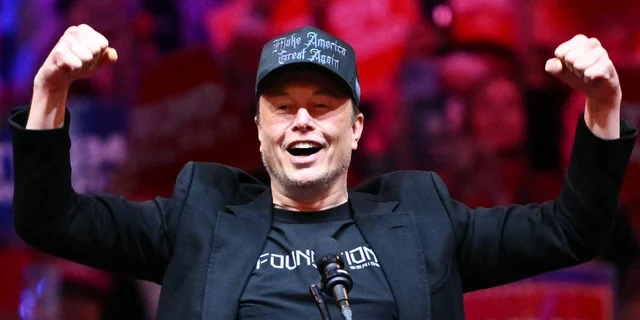
Delaware's Court of Chancery voided Tesla's pay package for Elon Musk, then held a later ratification vote could not reverse that judgment.
Legal & operations
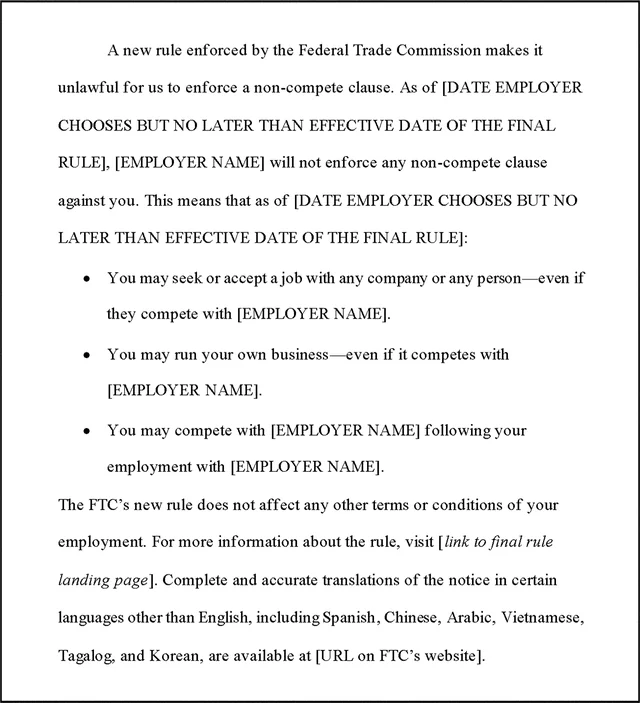
A Texas federal court set aside the FTC's 2024 noncompete rule for exceeding the agency's rulemaking authority, and the FTC later dropped its appeal.
Legal & operations
Delaware's Supreme Court applies deferential review to a controller buyout only if six safeguards are imposed before economic talks begin.
Legal & operations
An FTC complaint and order describe specific claims about DoNotPay's AI lawyer service that the company could not substantiate.
Legal & operations
The FTC's 2024 trade regulation rule prohibits fake reviews, review buying, undisclosed insider reviews, and suppression, effective October 2024.
Legal & operations
Delaware voided founder veto rights in a 2024 stockholder pact; its Supreme Court reversed in 2026 on timing, and a new statute covers future deals.
Legal & operations
SB 699 and AB 1076 let California workers void out-of-state non-competes and required employers to send written notice by February 2024.
Legal & operations
The Labor Department's 2024 rule replaced a two-factor test with a six-factor, totality-of-the-circumstances analysis for FLSA classification.
Company records
Confluent's 2021 S-1 disclosed Kafka's commercial economics and a net retention rate that fell for three straight periods.
Company records
UiPath's 2021 S-1 disclosed ARR, revenue and retention metrics that grew unevenly ahead of its Nasdaq listing.
Company records
Procore's 2021 S-1/A disclosed customer and revenue growth but no formal net-retention metric, unlike many SaaS peers.
Company records
Olo's 2021 S-1 disclosed a subscription-to-transaction revenue shift and a profitable 2020 tied to pandemic ordering.
Company records
ZoomInfo's 2020 S-1 disclosed leveraged private-equity ownership, adjusted EBITDA profit and a GAAP net loss driven by debt.
Metrics & economics
Battery Ventures' 2017 BOSS Index ranked 40 open-source projects by its own methodology; no later edition is visible now.
Metrics & economics
ICONIQ Growth's 2026 report benchmarks 137 mostly private software companies; the sample is the firm's own network, not a census.
Metrics & economics
Carta's 2026 report on employee equity and 401(k) plans draws on Carta's own client base, not a market-wide survey.
Metrics & economics
Kruze Consulting publishes CEO and C-suite salary benchmarks from roughly 800 startup clients' actual payroll records.
Failures & post-mortems
An EDNY indictment, jury verdict and judgment show what was charged, proven and sentenced in the Ozy Media case.
Failures & post-mortems
A bankruptcy filing, an SEC complaint and a criminal judgment document three distinct stages of FTX's collapse.
Failures & post-mortems
TechCrunch's contemporaneous and retrospective coverage record when and why Zume closed in 2023.
Failures & post-mortems
TechCrunch's reporting traces Virgin Hyperloop's 2022 pivot away from passengers to its December 2023 closure.
Failures & post-mortems
An 8-K and a Delaware docket record Fisker Inc.'s 2024 filing, a distinct company from the 2013 Fisker Automotive case.
Exits & ownership
VMware's own merger proxy and its closing 8-K record the cash-or-stock terms behind Broadcom's acquisition.
Exits & ownership
1Life Healthcare's own 8-Ks document the FTC's review and the deal's February 2023 close at $18 a share.
Exits & ownership
Splunk's merger proxy and closing 8-K record the $157-a-share deal and its regulatory break fees.
Exits & ownership
Illumina's own SEC filings document a 2021 close, a 2022 EU prohibition, a 2023 FTC divestiture order and a 2024 spin-off.
Exits & ownership
Amazon's and Twitch's own August 2014 statements record the deal terms, with no mention of the Google talks reported that summer.
Company records
Sprinklr's 2021 S-1 disclosed a unified customer-experience platform built organically, without a formal net-retention rate.
Company records
Companies House's own guidance shows the confirmation statement checks who runs and owns a company, not how it performed financially.
Company records
Companies Act 2006 and Companies House guidance show filleting and abridging are two distinct, separately conditioned accounts exemptions.
Company records
Companies House's PSC guidance and the underlying statute show the register records a stated control threshold, not an independently verified owner.
Metrics & economics
Monzo's filed FY2020 accounts pair a directors' going-concern statement with a separate EY material-uncertainty opinion, not a solvency finding.
Failures & post-mortems
Britishvolt's filed statement of proposals shows an accelerated sale raised £8.6m against accumulated losses exceeding £154m and £167.5m of equity raised.
Exits & ownership
HM Treasury's announcement and a Companies House PSC filing show HSBC UK Bank Plc acquired SVB UK through a resolution procedure, not a public bailout.
Legal & operations
The 2023 Act and Companies House's own rollout guidance show identity verification is now a live filing requirement, phased in years after Royal Assent.
Company records
Companies House's own guidance shows dormant-company status is a filing category distinct from HMRC's separate dormant-for-tax notification.
Failures & post-mortems
PwC's administrators' proposals show Made.com Design's assets sold to Next covered secured debt while unsecured creditors face up to 1.6% recovery.
Company records
Companies House's own incorporation guidance shows model articles are one available default, not the only lawful set of governing rules.
Company records
ASX's own Chapter 1 sets a profit test, an assets test and a 300-holder spread rule for admission, not a rating of investment quality.
Company records
Xero's 2012 ASX admission was a secondary listing of existing NZX shares, not a capital-raising IPO, its own market releases show.
Company records
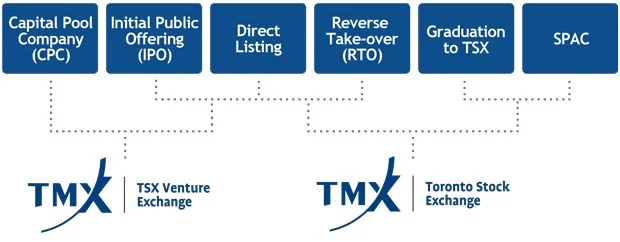
TMX's own Policy 2.1 sets separate net-asset, working-capital and float thresholds for TSX Venture's two tiers, apart from the senior Toronto exchange.
Company records
Shopify's SEC prospectus is a US registration statement; its TSX listing answered to separate Canadian securities regulators, the filing itself states.
Legal & operations
Regulation (EU) 2017/1129, in force since 21 July 2019, sets the prospectus rule for offers and listings on EU-regulated markets, not the UK's.
Company records
Delivery Hero's Frankfurt IPO prospectus states BaFin approved only its coherence and comprehensibility, not the company's investment merits.
Company records
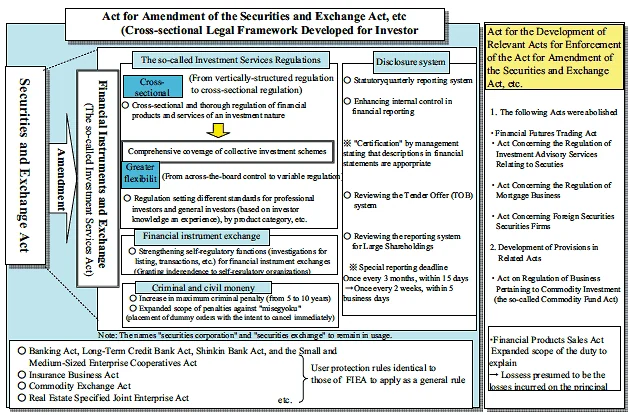
Japan's Financial Instruments and Exchange Act requires periodic filings through EDINET, separate from TSE's own timely-disclosure network, TDnet.
Company records
Mercari's June 2018 listing used TSE's Mothers market, built for growth companies aiming at the senior board, not equal to today's Prime Market.
Company records
Zomato's April 2021 DRHP, filed with SEBI under the ICDR Regulations, states SEBI does not endorse the offer or guarantee the document's accuracy.
Failures & post-mortems
SEC Rule 477 and Form RW let an issuer pull a registration statement before it takes effect, without stating why.
Failures & post-mortems
Endeavor's 2019 S-1 proposed shares above $26; its 2021 IPO, after withdrawal and refiling, priced at $24.
Failures & post-mortems
Magnum Opus and Forbes disclosed that a closing deadline passed and who invoked it, not why the deal did not close.
Exits & ownership
Grab's 2021 closing filings disclose gross proceeds and PIPE terms; neither states a single equity value.
Funding & terms
Churchill Capital IV's Item 3.02 filing fixes the Lucid PIPE at $2.5 billion and $15 a share, subject to closing.
Failures & post-mortems
Lordstown Motors' 2021 10-Q flagged doubt about survival two years before its unrelated 2023 Chapter 11 filing.
Failures & post-mortems
Virgin Orbit's Nasdaq notice cited its own Chapter 11 filing and a late 10-K, not a bid-price cure period.
Exits & ownership
Root's shareholders approved a reverse split in June 2022; the board fixed its 1-for-18 ratio that August.
Exits & ownership
Zendesk's 2022 buyout closed on a merger proxy alone, consistent with no affiliate in the buyer group.
Legal & operations
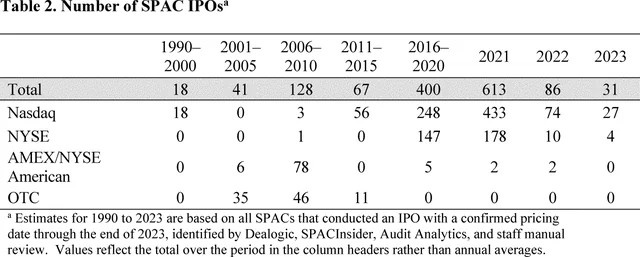
The SEC's January 2024 release adds SPAC disclosure and liability rules; it does not ban the SPAC structure.
Legal & operations
The American Jobs Creation Act's Section 409A taxes deferred pay immediately unless a plan's timing meets its rules.
Legal & operations
IRC Section 422 sets the plan-approval, pricing and holding-period conditions that separate an ISO's tax treatment from an NSO's.
Company records
Google's filed Schedule TO-I shows a one-for-one exchange that carved out Schmidt, Page, Brin and outside directors.
Legal & operations
SEC guidance compares pre-IPO compensation valuations to the offering price; a 409A safe harbor answers a different question.
Legal & operations
Treasury's 409A regulations presume three valuation methods reasonable, but the IRS can still rebut a grossly unreasonable one.
Legal & operations
Section 3121(v)'s FICA timing rule and Section 409A's distribution rule can tax the same RSU at different moments.
Exits & ownership
IRC Section 4975(e)(7) and ERISA define an ESOP; a sale to one turns on fiduciary duties, not automatic tax relief.
Company records
The filed Schedule TO-I shows Amazon's 2001 exchange excluded certain grants and repriced eligible options with a vesting bonus.
Legal & operations
Rule 144's text ties resale conditions to affiliate status and an issuer's reporting history, not one universal clock.
Exits & ownership
The IPO prospectus and a later credit-facility filing document two distinct post-IPO share mechanics, not a single flood.
Exits & ownership
SEC filings show outside vehicles buying Plaid's common stock in 2021 and 2025, distinct from a company-run tender offer.
Legal & operations
EGRRCPA directed the SEC to raise Rule 701(e)'s threshold, and its 2018 release left everything else about the rule alone.
Legal & operations
Rule 506(c) let issuers advertise if every buyer is verified accredited, a documented step 506(b) still does not require.
Funding & terms
Form C-AR requires annual reports scaled to revenue, and the duty ends only on conditions the rule itself states.
Funding & terms
Elio's 2015 offering circular shows a Tier 2 raise well under the era's $50 million ceiling, with its own reporting load.
Exits & ownership
Nasdaq Private Market's subsidiaries are registered broker-dealers running registered trading systems, not the stock itself.
Company records
Form S-8 lets an eligible reporting company register employee-plan shares, effective the moment the form is filed.
Funding & terms
The SBIR and STTR Extension Act of 2022 extended the set-aside programs to fiscal 2025 and added foreign-risk disclosure rules.
Funding & terms
SBA's own policy directive sets STTR's 40/30 percent work-share floor between a small business and its research-institution partner.
Funding & terms
DARPA's own Guide to BAAs describes a broad research solicitation that runs on a separate track from its SBIR/STTR topics.
Funding & terms
NIH's SEED office applies the statutory SBIR/STTR set-aside through registration and review steps distinct from other agencies'.
Funding & terms
The Commission's 2026 EIC Work Programme treats grant-only, blended-finance and equity-only awards as separate tracks, not one bundle.
Funding & terms
UKRI's own guidance shows Smart Grants closed to new applicants while Innovation Loans remain an open, interest-bearing facility.
Funding & terms
SBA's own guidance shows the agency backing a portion of a loan a private lender originates, owns and services.
Funding & terms
GSA's own guidance and FAR Subpart 8.4 show a Schedule contract lets agencies order at their own discretion, not on a guarantee.
Legal & operations
The FedRAMP Authorization Act, enacted inside the FY2023 NDAA, gave the cloud authorization program statutory footing for the first time.
Funding & terms
SBIR.gov's own award database and company directory are scoped to SBIR/STTR awards, not to every federal non-dilutive program.
Metrics & economics
FASB's ASU 2014-09 replaced industry-specific revenue rules with a five-step model tied to performance obligations, not cash receipt.
Metrics & economics
FASB's ASU 2016-02 puts lease assets and liabilities on lessee balance sheets, ending decades of off-balance-sheet operating leases.
Metrics & economics
PCAOB inspection reports withhold quality-control criticisms for twelve months, giving firms one chance to fix them before disclosure.
Legal & operations
The JOBS Act excuses an emerging growth company's auditor from attesting to internal controls, for up to five years after IPO.
Legal & operations
The JOBS Act let emerging growth companies file IPO papers confidentially, a window the SEC later extended to every issuer by policy.
Metrics & economics
PCAOB Auditing Standard 1301 makes an auditor report critical policies and unusual transactions to the audit committee, not the public.
Metrics & economics
SEC Regulation G requires any public non-GAAP figure, such as adjusted EBITDA, to be reconciled to its GAAP measure.
Metrics & economics
FASB's 2009 Codification gave U.S. GAAP one numbered structure, reorganizing prior standards without changing accounting treatment.
Metrics & economics
PCAOB Auditing Standard 2201 governs the internal-control audit that Section 404(b) attestation requires, for the filers it covers.
Metrics & economics
Katapult's 2022 10-K disclosed unremediated material weaknesses first found in the 2018 audit, distinct from any going-concern issue.
Company records
Kickstarter's own 2015 announcement and charter show what a Delaware public benefit corporation conversion actually changed.
Company records
Allbirds' 2021 registration statement shows the company became a Delaware PBC five years before going public.
Legal & operations
Cooley GO's own guidance describes how a non-Delaware company restructures under a new Delaware parent before U.S. financing.
Legal & operations
Labor Code Section 2870 excludes an employee's own-time inventions from assignment clauses when stated conditions are all met.
Legal & operations
Nasdaq's own rule restricts post-listing voting changes but leaves dual-class sunset timing to each company's charter.
Legal & operations
Insurers and brokers describe director and officer coverage as Side A, Side B and Side C components, each protecting a different party.
Legal & operations
DGCL Section 145 requires indemnifying a director who wins outright but leaves broader indemnification to the corporation's choice.
Exits & ownership
Cooley GO's published restricted stock template uses a one-year cliff and lets founders negotiate acceleration on a sale.
Legal & operations
The USPTO's Trademark Trial and Appeal Board hears opposition proceedings through its own filing systems and manual of procedure.
Legal & operations
The AIA's inter partes review process, effective 16 September 2012, lets the PTAB cancel patent claims only after a final written decision.
Funding & terms
EF's own pages show money paid before a cofounder is found and equity priced only after incorporation.
Funding & terms
Antler's own FAQ says terms are set market by market, and its US and UK pages show different structures.
Funding & terms
Seedcamp's own FAQ and published pre-seed agreement show a variable cheque size and a deal-by-deal instrument.
Funding & terms
Archived snapshots of Techstars' own terms page date the rise from $120,000 to $220,000 to early 2025.
Funding & terms
Indie.vc's GitHub-hosted terms still describe a redemption structure the current indie.vc site does not.
Funding & terms
Calm Company Fund's own FAQ describes a Shared Earnings Agreement repaid from founder earnings, not a priced round.
Funding & terms
Lighter Capital's own FAQ discloses a 1.3-1.5X repayment cap while withholding a single royalty percentage.
Funding & terms
Founders Pledge's own pages describe a signed personal commitment, distinct from its aggregate pledged and donated totals.
Legal & operations
Zebras Unite's own bylaws and articles describe a member-owned cooperative, with capital advice as one service.
Funding & terms
Alchemist's own FAQ ties its typical 5% equity ask to a revenue-source definition of an enterprise startup.
History
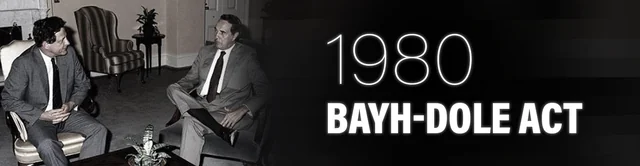
The Bayh-Dole Act's own text shows what changed for federally funded inventions, not what any single spinout later claimed.
History
The Small Business Investment Act's 1958 text set the original SBIC leverage limits that later program rules substantially changed.
History
NSMIA's text names which offerings lost state registration review in 1996, not a blanket end to state securities law.
History
The SEC's 2000 adopting release shows what Rule 10b5-1 required before the 2022 amendment added cooling-off periods.
History
The 2012 statute required SEC rulemaking before crowdfunding sales were legal, and the final rules took until 2016.
History
Museum archives document who founded Intel in 1968 and from where, but not the financing arrangement often retold about it.
History
The widely repeated Genentech IPO figures trace to a 2008 shareholder complaint, not to the offering document itself.
History
Museum archives name who left Fairchild for Amelco in February 1961 and who arranged Teledyne's financing, with one name unconfirmed.
History
Jerry Sanders' recorded recollection, not a filed plan document, is the source for a stock-option recruiting story at National Semiconductor.
History
Codified text dates Regulation D to March 1982 and marks which provisions, like Rule 506(c), came from later amendments.
Funding & terms
TMX's own Policy 2.4 lets a cash shell list on TSX Venture, then gives it 24 months to complete a qualifying transaction, a Canadian-specific route.
Legal & operations
The SEC's own filing-review process, illustrated by a real letter, shows comment letters test disclosure, not wrongdoing.
Company records
EDGAR's own full-text search finds hundreds of 2008-2009 option exchange filings split between cash buyouts and one-for-one swaps.
Funding & terms
The SEC's 2015 rule ties Tier 2's higher ceiling to audited financials and state-law preemption that Tier 1 lacks.
No records match. Clear the filters to start again.