
The record
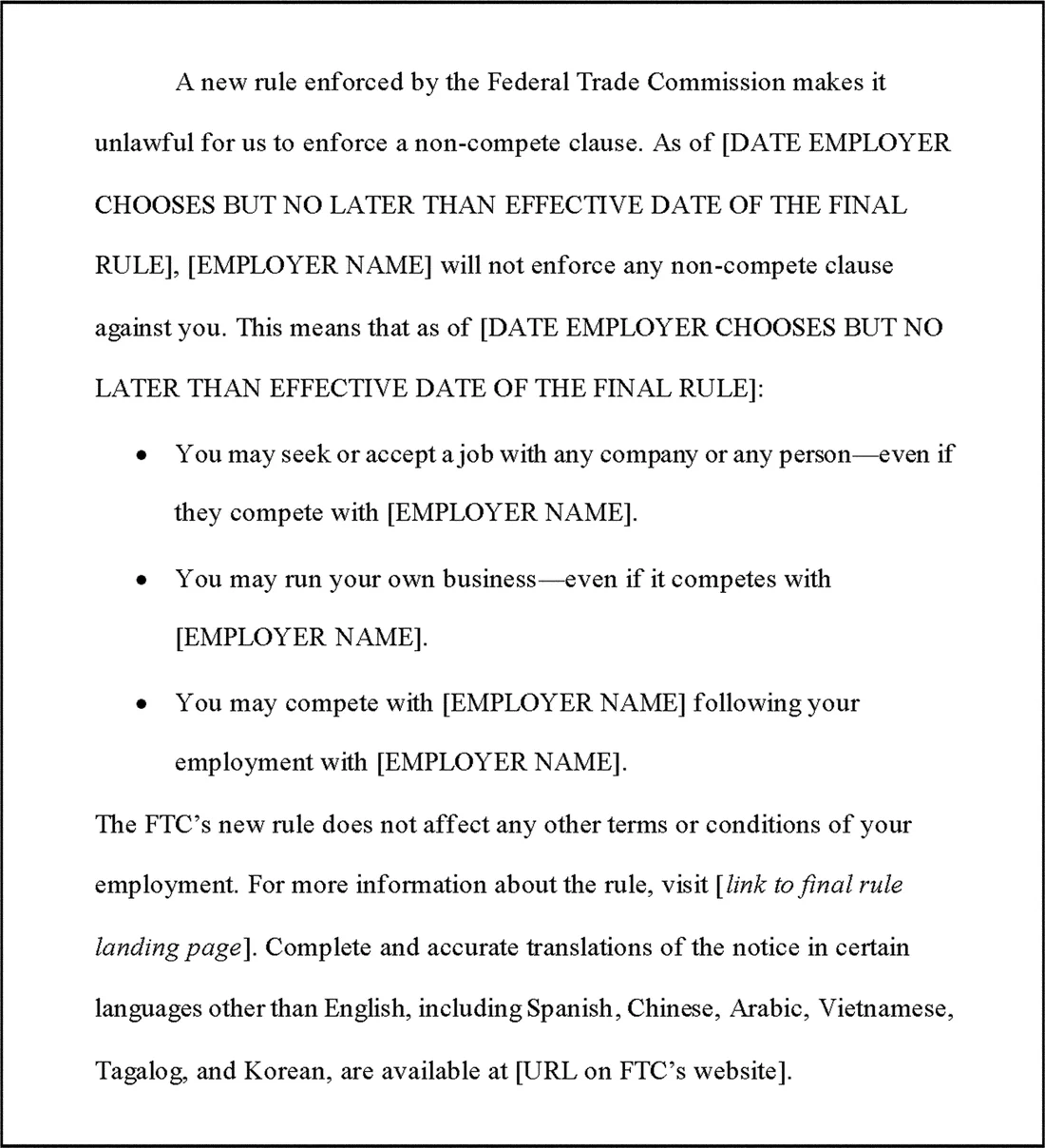
On April 23, 2024, the Federal Trade Commission voted to adopt a final rule banning most employer noncompete clauses nationwide, published in the Federal Register on May 7, 2024 with an effective date of September 4, 2024. The FTC's own announcement estimated the rule would raise average worker earnings by $524 a year, cut health-care spending by up to $194 billion over a decade, and generate more than 8,500 new businesses annually — the agency's own modeled figures, not audited results. Before the rule ever took effect, a Texas employer, Ryan LLC, and several business groups sued; on August 20, 2024, Judge Ada Brown of the U.S. District Court for the Northern District of Texas granted summary judgment for the plaintiffs in Ryan LLC v. FTC, holding that the FTC lacked statutory authority to issue the rule and ordering that it “shall not be enforced or otherwise take effect.”
What the documents establish
The court's order rests on a reading of the FTC Act's text: Section 6(g)'s grant of power to “make rules and regulations for the purpose of carrying out” the Act is, in the court's words, a “housekeeping statute” for procedural rules, not a delegation of authority to create substantive rules backed by penalties — a conclusion the opinion draws partly from the absence of any statutory penalty for violating a Section 6(g) rule. The FTC's own current summary of the rule confirms the sequence that followed: the agency appealed to the Fifth Circuit on October 18, 2024, then moved to dismiss that appeal on September 5, 2025. That page states, as of its own retrieval date, that “the Noncompete Rule is not in effect and it is not enforceable.”
The operating read
Editorially, the rule's life cycle — adopted, challenged, enjoined for some plaintiffs in July 2024, then vacated nationwide in August, then abandoned on appeal in 2025 — means an employer cannot treat the ban as either a settled compliance obligation or a settled non-issue going forward; the vacatur turned on the FTC's rulemaking authority under the statute as it exists today, and a future rule grounded in adjudication rather than rulemaking could still reach non-competes by another route. The FTC's own figures in the original announcement were the agency's modeled projections at the time of adoption, not a measured outcome, and should be read as such regardless of the rule's status.
What to check before you decide
Before assuming non-competes are unenforceable, or enforceable, on the strength of this history, check the following:
- Does the FTC's current published status for the rule, or any successor rulemaking, match what is being represented to you?
- What does the applicable state's own non-compete law provide, independent of this federal rulemaking?
- Is the non-compete at issue one the FTC's now-vacated rule would have covered, or is it already restricted by separate authority, such as a state statute?
This describes the rule's own text, the district court's order, and the FTC's own subsequent record; it does not address any specific non-compete agreement.
Sources & their limits
These are the existing record’s sources and retrieval dates, preserved from the archive. Source statements, historical events and editorial interpretation are distinct.
- Non-Compete Clause Rule, 89 Fed. Reg. 38342 (May 7, 2024)
Federal Register text of the final rule, its prohibitions on new and existing non-competes, and its September 4, 2024 effective date.
- FTC Announces Rule Banning Noncompetes
FTC's own announcement and modeled estimates of the rule's effects, plus the page's later-added note on the rule's vacatur and the FTC's dismissed appeal.
- Ryan LLC v. Federal Trade Commission, Memorandum Opinion and Order, No. 3:24-cv-00986-E (N.D. Tex.)
District court's order setting aside the rule for exceeding the FTC's statutory rulemaking authority under Section 6(g).
- Noncompete Rule (case status page)
FTC's own current status page confirming the rule is not in effect and recording the FTC's October 2024 appeal and September 2025 dismissal of that appeal.